eine Nachricht hinterlassen
Wenn Sie an unseren Produkten interessiert sind und weitere Einzelheiten erfahren möchten, hinterlassen Sie bitte hier eine Nachricht. Wir werden Ihnen so schnell wie möglich antworten.
Dust contamination in a manufacturing facility is not a cleanliness problem. It is an equipment reliability and maintenance cost problem, and a direct threat to production uptime. Fine particulate works into bearing housings, coats sensor faces, and migrates through door gaps into controlled environments that took serious effort to protect. The right brush seal, installed correctly at the right gap, cuts that exposure significantly without adding friction or complexity.
If you are asking what is the best brush seal for dust control in manufacturing, the answer depends on three variables: filament material, bristle density, and mounting profile. Each decision affects a different part of the performance equation. Get all three right and you have a seal that holds up across thousands of operating cycles. Get one wrong and you are back to elevated dust readings within a season. The distinctions that matter are specific and measurable, and this guide walks through each one.
Why Brush Seals Outperform Rubber and Vinyl for Dust Control
Brush seals are not just a softer alternative to rigid seals. They solve a fundamentally different problem: sealing surfaces that are not flat, not consistent, and not forgiving. Pitted concrete dock floors, worn door tracks, and irregular machine frames all share the same trait, they create gaps that rigid seals cannot close. Bristles close those gaps because they flex and conform on contact rather than bridging over imperfections.
The Bristle Advantage on Uneven and Rough Surfaces
Dense nylon or polypropylene filaments press into surface irregularities rather than resting on high points. A solid rubber or vinyl seal can only contact the surface at its peaks, leaving the valleys open. In a manufacturing environment, those valleys are exactly where dust infiltrates. Bristles win that contact battle by design, not by being softer, but by being flexible at the right scale.
Industry testing in comparable loading dock applications shows that well-configured brush seals can reduce air infiltration by up to three times compared to vinyl alternatives. Since airflow is the primary carrier mechanism for fine particulate, blocking air movement is the most direct route to reducing dust on the protected side of any seal.
Where Rigid Seals Crack, Compress, and Fail First
Vinyl seals crack under UV exposure and repeated compression. Rubber seals lose their cross-sectional profile in high-cycle door applications because compression fatigue degrades the material over time. Brush seals retain shape memory: the filaments spring back to their original position after each contact cycle, maintaining consistent contact pressure even after extended use. A loading dock door that opens and closes fifty times a day will wear through a vinyl seal in a matter of months under typical conditions. A nylon brush seal running the same cycle count holds its geometry and keeps sealing.
What Is the Best Brush Seal for Dust Control in Manufacturing? Start with Filament Material
Filament material is the single most consequential decision in brush seal selection. It defines temperature tolerance, chemical compatibility, UV resistance, and long-term durability. Two materials cover the vast majority of industrial dust-control applications, with a third configuration reserved for the most demanding sealing requirements.
Nylon: Durable, UV-Resistant, High-Cycle Ready
Nylon monofilament is the strongest general-purpose choice for industrial dust exclusion. It retains its shape across wide temperature swings, with standard nylon handling up to 120°C and heat-stabilized variants holding integrity up to 225°C near heat sources or processing ovens. UV resistance makes it the correct selection for outdoor dock doors and loading bay applications where polypropylene would degrade noticeably within one to two seasons. In high-cycle abrasion scenarios, nylon outlasts polypropylene by a significant margin, typical service life runs five to ten years under favorable conditions, where polypropylene in the same abrasive environment may require replacement in two to four years.
Polypropylene: The Indoor, Chemically Resistant Option
Polypropylene offers excellent chemical resistance at lower cost, making it a practical selection for indoor environments where UV exposure is not a factor. It handles strong acids and alkalis that would degrade nylon, which makes it well-suited to chemical processing areas, battery rooms, and facilities with regular cleaning chemical exposure. Its softening point sits at around 117°C, so it is not appropriate near heat sources, ovens, or outdoor dock applications where temperatures exceed that threshold. For machine enclosure seals and light-traffic access panels in chemically active indoor settings, polypropylene delivers reliable performance at a lower per-unit cost. Always request a material compatibility sheet for the specific chemicals present before finalizing this selection.
Metal-Channel Strip Brushes for Maximum Exclusion
When dust exclusion requirements are extreme and air infiltration must be near-zero, metal-channel strip brush deliver the highest barrier performance. These configurations can block up to 98.5% of air infiltration, creating a near-continuous seal face against rolling doors and automated enclosure gates, a common specification for high-value cleanrooms and precision assembly areas where particulate control is critical. The trade-off is application specificity: metal-channel configurations are not a universal retrofit option, but for controlled environments where particulate exclusion cannot be compromised, they are the correct tool.
Mounting Profiles and How They Determine Fit
The best filament material mounted incorrectly produces a seal that looks right in a catalog photo but fails under real operating conditions. Mounting profile selection determines whether bristles make consistent, reliable contact with the sealing surface across the full length of the seal and across its service life.
U-Channel and Screw-In Profiles for Doors and Access Panels
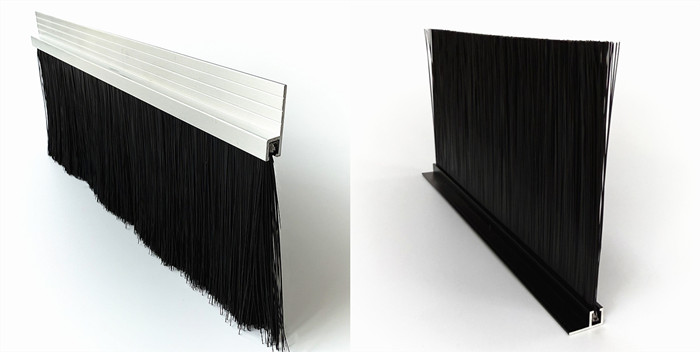
The straight U-channel profile is the standard mounting method for industrial door bottoms, enclosure perimeters, and access panel seals. Slotted screw holes allow positional adjustment after installation so that bristles maintain the right contact pressure without dragging excessively or lifting off the surface. This is the correct standard mounting method for most flat-surface applications and the configuration most procurement teams encounter first. The adjustability matters more than it might seem: even a few millimeters of position shift changes whether the bristles are applying useful pressure or just resting against the surface.
Flexible Bases for Curved Surfaces and Irregular Machine Frames
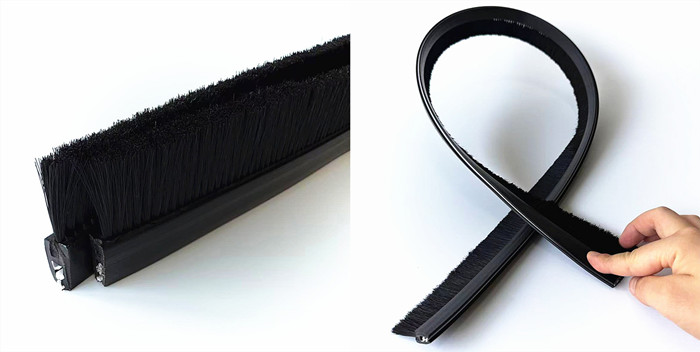
CNC enclosures, chip guards, and curved mounting surfaces cannot accommodate a rigid channel without leaving unsealed zones at bends and corners. Flexible strip brushes mounted on TPE or TPV rubber bases conform to the geometry of the mounting surface, maintaining consistent bristle contact around curves and irregular profiles where a rigid channel would bridge the gap rather than seal it. BaJie Brush produces flexible strip brushes with fill densities among the highest available in this configuration, creating an almost continuous barrier across the seal face even on non-planar mounting surfaces. Request fill percentage figures and a dimensional datasheet when evaluating this option.
Skirting Brush Configurations for Conveyor Dust Control
Conveyor skirting brushes mount along transfer points and belt edges to contain dust at its source rather than letting it escape into the surrounding air. The brush presses against the belt edge or conveyor wall, blocking fine particulate from migrating into the environment. This configuration requires filaments that flex under belt movement without wearing down prematurely, polypropylene or nylon yarn with slotted adjustment mounting is the typical specification for high-contact transfer zones. Many manufacturers specify industrial brush seals for these skirting applications because of their proven durability at belt interfaces.
The Specs That Separate Effective Seals from Underperformers
Two seals can look identical in a supplier catalog and perform at completely different levels in the field. The specs tell the real story before any sample gets installed. These are the numbers worth requesting before issuing a purchase order.
Bristle Density: What Fill Percentage Actually Tells You
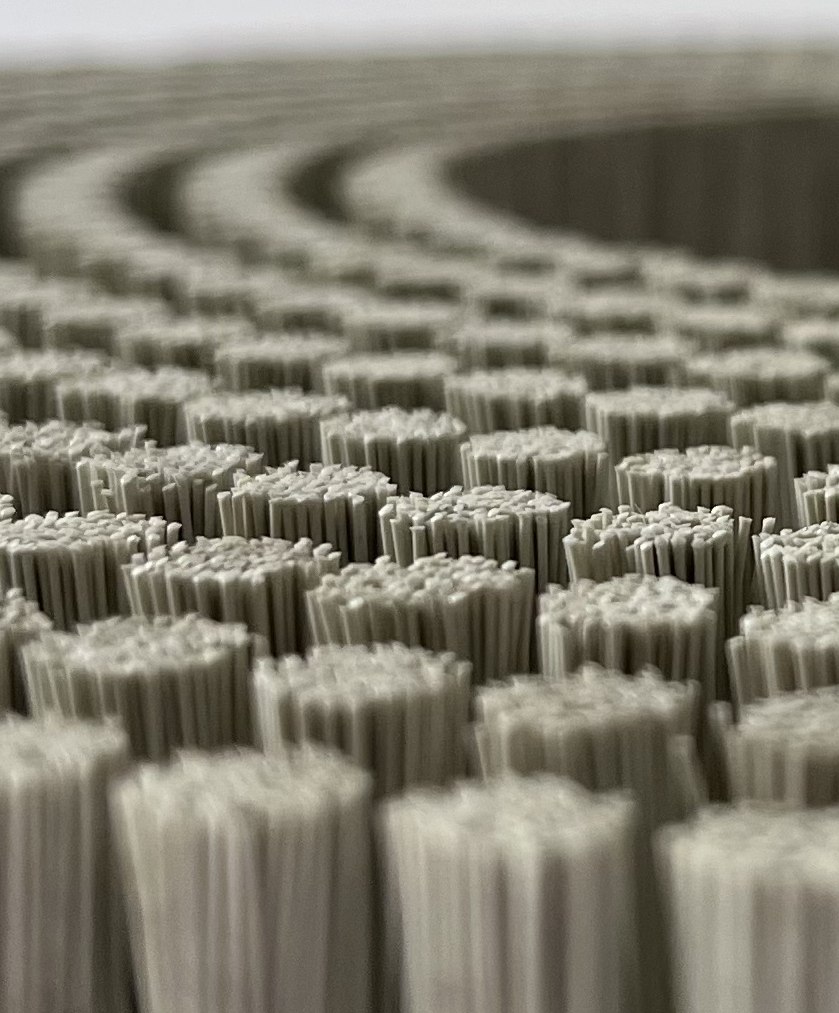
Bristle density, measured as a fill percentage or filaments per inch, directly determines how much particulate can pass through the brush face. Standard configurations leave measurable gaps between filament clusters that fine dust exploits. High-density configurations close those gaps significantly. For fine-particle dust control, density matters more than filament diameter alone. The difference between a 50% fill density seal and an 80% fill density seal is the difference between reduced infiltration and a substantially more complete exclusion barrier at the seal face. When evaluating vendors, ask for fill percentage figures rather than hole-count metrics, which are not standardized across manufacturers.
Gap Tolerance, Filament Diameter, and Temperature Ratings
Filament diameter affects both seal flexibility and abrasion durability: thinner filaments flex more easily but wear faster under high-contact loading. Ask vendors for the rated gap size the brush configuration can reliably seal, confirmed against your actual installation measurement. For gap sizes in the 2mm to 15mm range, precision filament length selection is critical because increasing the gap by as little as 3mm can raise leakage rates by two to five times due to reduced compression. Always confirm temperature range compatibility before placing an order, particularly for seals near heat sources, ovens, or outdoor dock applications.
Chemical Resistance and What to Ask Before Ordering
Request a material compatibility sheet for any application beyond standard ambient conditions. Polypropylene handles most acids and solvents and performs well in wet or high-humidity environments since it absorbs less than 0.2% moisture. Nylon performs better in high-heat, dry, and high-abrasion environments but can soften in consistently humid conditions due to its higher moisture absorption rate. Matching filament material to the specific chemicals present in your facility prevents premature seal failure that has nothing to do with the quality of the brush itself.
Matching Seal Type to Your Specific Application
With materials and specs defined, the selection becomes a zone-by-zone decision. Different application areas in manufacturing have distinct demands, and a seal configuration optimized for a loading dock door is not the correct specification for a CNC enclosure or a conveyor transfer point.
Conveyors and Bulk Material Transfer Points
Conveyor skirting requires flexible filaments that absorb lateral belt movement without cracking or permanently compressing. Polypropylene or nylon yarn brushes in U-channel profiles with slotted adjustment screws provide the flex and contact durability needed at high-traffic transfer zones. Gap sizes here are often variable due to belt wear, so specifying slightly longer bristles than the nominal gap accommodates operational variation without requiring constant readjustment.
CNC Machine Enclosures and Chip Guards
Machine enclosure seals face coolant splash, metal chips, and high-frequency operator access throughout a production shift. Flexible strip brushes on rubber bases handle the curved enclosure geometry that rigid channels cannot follow. Nylon filaments resist many of the coolant chemicals common in metalworking environments and maintain their shape through high-cycle door operation, request a compatibility sheet for your specific coolant formulation before finalizing the specification. The higher unit cost compared to polypropylene is offset by longer service life in abrasive, wet enclosure conditions.
Loading Dock Doors and Industrial Access Panels
Dock doors demand the highest dust exclusion performance and the most durability. High-density nylon brushes in 45-degree angle profiles seal effectively against door ribs on roll-up door applications. For rough or pitted dock floors, bristle flexibility is the critical variable because rigid seals simply cannot close irregular concrete surfaces. The same seals that handle this geometry maintain their performance over years of daily loading cycles, which justifies the upfront cost compared to vinyl or rubber alternatives that can require frequent replacement under comparable conditions.、
Lifespan, Wear Patterns, and When to Replace
Even the best brush seal has a service life. Understanding what drives wear helps you plan maintenance and procurement cycles proactively rather than reacting to failed seals and elevated dust readings.
What Accelerates Wear in High-Cycle Environments
The two primary wear drivers are abrasive surface contact and compression fatigue. Brush seals running against rough concrete or metallic edges wear faster than those sealing against smoother profiles. High-density configurations extend service life by distributing contact load across more filaments, reducing wear per bristle. Start with visible filament thinning and audible airflow through gaps that used to be quiet. Rising dust counts on the protected side confirm the seal has crossed the wear threshold and replacement is overdue.
Signs It Is Time to Replace Your Brush Seal
When dust levels in a controlled area increase without any process change, the seals are the first place to check before investigating more expensive equipment issues. A seal that looked adequate at installation often reaches the threshold where wear has opened enough gaps to allow meaningful infiltration, and the degradation is gradual enough that it goes unnoticed until contamination levels trigger a larger investigation. In dry, abrasive, high-cycle environments, nylon monofilament outlasts polypropylene yarn, with nylon typically delivering five to ten years of service life where polypropylene in the same conditions may require replacement in two to four years.
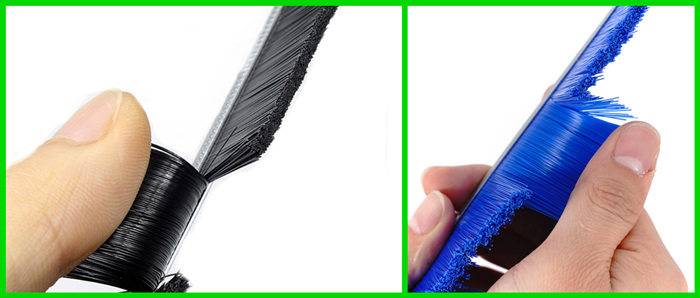
Choosing the Best Brush Seal for Dust Control
Now you know what is the best brush seal for dust control in manufacturing: the answer is never a single item. It is the intersection of material, density, and mount geometry, each matched to the specific demands of the installation. Nylon outperforms rubber and vinyl on durability and shape retention in high-cycle applications. High-density configurations maximize the sealing barrier at critical gap zones. And the right mounting method keeps that performance consistent under real operating conditions. For further reading on practical dust control strategies that complement sealing work, consider reviewing industry resources.
Before requesting samples or issuing purchase orders, ask vendors for fill percentage figures, rated gap tolerance, temperature compatibility ranges, and material data sheets. The difference between a seal that holds up for 18 months and one that performs reliably for five or more years almost always traces back to those numbers. BaJie Brush offers fully customizable industrial brush seal configurations, including strip brushes, skirting brushes, and shaft sealing brush assemblies, built to spec and available for direct export. Contact the BaJie Brush team to request a configuration review or product samples matched to your application.
Frequently Asked Questions
What is the best brush seal for dust control in manufacturing?
The best brush seal for dust control in manufacturing depends on the application. For outdoor or high-cycle environments, high-density nylon strip brushes in U-channel or angled profiles deliver the longest service life and strongest dust exclusion. For indoor chemically active environments, polypropylene filaments offer better resistance at lower cost. Metal-channel configurations are specified when near-total air infiltration exclusion is required.
What is a brush gasket and when is it used?
A brush gasket is a brush seal configured to fill the gap between a door or panel face and its frame, functioning similarly to a traditional compressible gasket but using dense filaments instead of foam or rubber. Brush gaskets are used in enclosures where repeated door cycles would compress and deform a foam gasket, the bristles recover their shape after each cycle, maintaining a consistent seal over time.
What is a shaft sealing brush?
A shaft sealing brush is a circular or strip brush configured to seal around a rotating or reciprocating shaft, preventing dust, chips, or coolant from migrating along the shaft into adjacent equipment or controlled areas. Common in CNC machines and packaging equipment, shaft sealing brushes use dense nylon or polypropylene filaments that maintain contact with the shaft surface through motion cycles without generating damaging friction.
How do I know when to replace a brush seal?
Replace a brush seal when you observe visible filament thinning, hear airflow through gaps that were previously quiet, or notice increased dust accumulation on the protected side of the installation. Gradual degradation is the norm, seals rarely fail suddenly, which means contamination can increase for weeks before the cause is identified. Scheduled inspection intervals aligned with your facility's maintenance cycle prevent that gap from widening.



 IPv6 network supported.
eine Nachricht hinterlassen
Scannen zu Wechat :

Scannen zu WhatsApp :